
Originally developed as a visualization platform for the driller’s cabin, Aura consolidates multiple sources of real-time information—camera feeds, operational data, key performance indicators, and decision-support overlays—into one configurable interface. Today, that same platform approach is being applied to lifting and handling operations, giving crane operators the visibility and information to work more safely, efficiently, and remotely.
“Aura combines major advances in digital technology with decades of research and practical work experience on remote operations,” said Per Øyvind Ødegaard, Manager of Software and Automation. “Today, crane operators are open to remote solutions because they clearly see the safety and cost benefits.”
By consolidating multiple data screens into a single interface, Aura provides a customizable, comprehensive overview of operations. In addition to camera views, Aura supports overlay applications that integrate operational information from multiple third-party sources, including real-time load data, equipment health diagnostics, motion analytics, and environmental monitoring.
Unlike traditional camera and data systems with fixed analog infrastructure, Aura is designed as a future-ready digital platform that can adapt and expand to meet changing operational requirements. The platform enhances operational flexibility by allowing operators to create and switch between preconfigured layouts optimized for specific tasks and lifting scenarios.
Additional cameras, monitoring systems, sensors, and other new data sources can be integrated over time, allowing operators to continuously expand system capabilities without the time and expense of redesigning the entire solution.
The Aura platform can be installed and accessed remotely, either at another location onboard the heavy-lift vessel or at an onshore operation center, opening the door for safer, more flexible, and more cost-efficient crane operations. For example, remote operations can eliminate the need for an onboard operator cabin, significantly reducing a crane’s capital expenditure.
“Lowering personnel exposure is another key driver for leveraging Aura for remote operations,” said Håvard Høgset, Engineering Director. “For vessels with multiple cranes, operators can reduce crew requirements, taking personnel out of ‘red zone’ areas and shifting them to onshore operation centers, improving both safety and operational efficiency.”
NOV has already demonstrated these capabilities through a series of successful test cases. Using a remote Aura workstation in NOV’s Kristiansand, Norway office, engineers controlled a full-scale crane located in Søgne, approximately 20 kilometers (about 12 mi) away. The system was also showcased at various industry events.
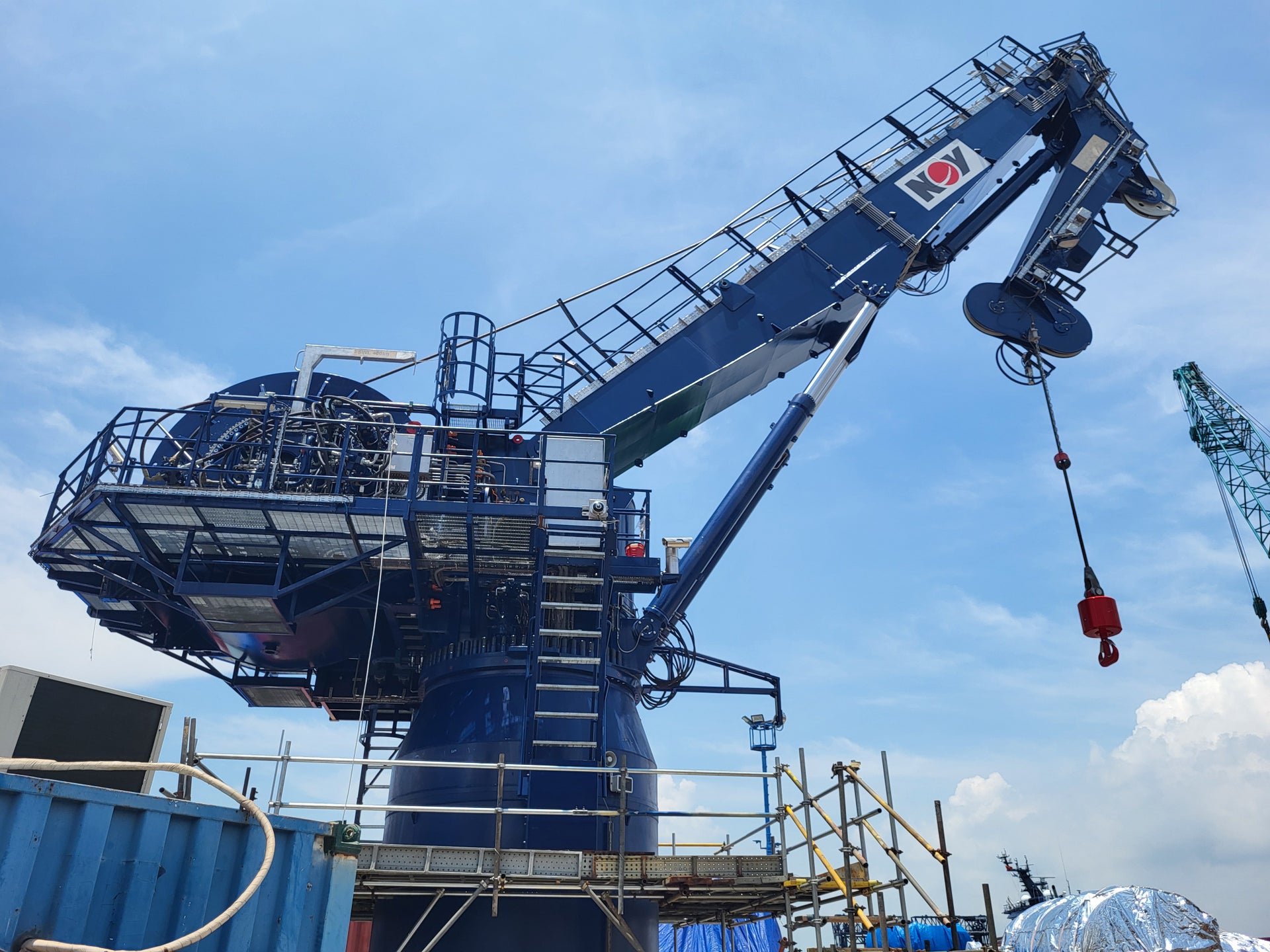
Following these trials, NOV quickly went to work incorporating Aura into several crane construction projects. One fully remote-operated crane has already been delivered to a customer, with Aura serving as the core data visualization platform. Another two cranes containing Aura are being built and are scheduled for delivery by the beginning of 2027. Additional projects are in progress,
Customers of these systems will take a stepwise approach to remote operations, beginning with using Aura onboard the vessel to guide crane movements. Once they’ve established working experience with the system and gained confidence in what it can do, these operators will likely transition to full remote crane control from land.
As the platform continues to evolve, Aura has the potential to transform crane operations from isolated onboard activities into fully connected, remotely managed operations centers. Its scalable architecture creates a pathway toward safely operating multiple cranes from centralized onshore locations—giving customers the flexibility to adapt to increasingly complex offshore lifting operations.